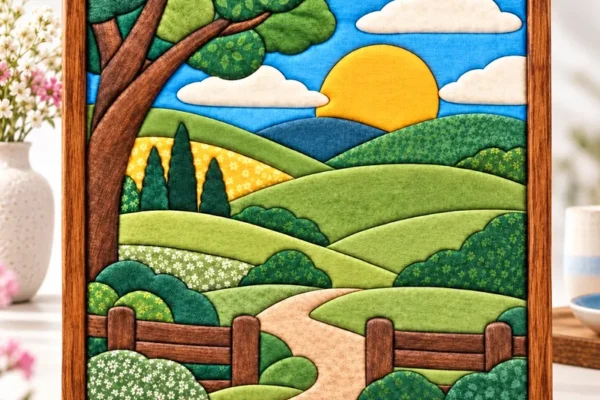
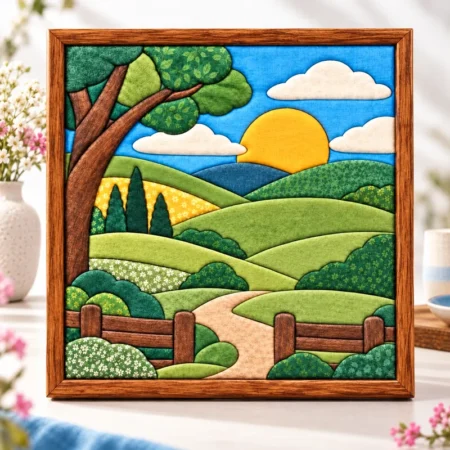
Good kinusaiga supplies are simple and cheap: a sheet of foam, a sharp knife, a blunt tool for tucking, fabric scraps and a pattern. You do not need a needle, thread or a sewing machine. This guide lists the 9 things you need, explains which foam board works best for kinusaiga, and shows where you can save money on kinusaiga art supplies.
On this page
The short kinusaiga supplies list
- Foam board: rigid foam at least 10 mm thick (see below).
- A printable pattern: the design, with numbered pieces.
- A way to transfer the pattern: a double-sided adhesive sheet or carbon transfer paper.
- A craft knife with fresh blades (a 30-degree blade is ideal).
- A tucking tool: a blunt spatula, a bone folder, an awl or even a butter knife.
- Fabric scraps: cotton, silk, crepe or fabric from old clothes.
- Sharp fabric scissors.
- A cutting mat to protect your table.
- A frame (optional), such as a shadow box or a simple wooden frame.
What foam to use for kinusaiga
The best foam board for kinusaiga is rigid extruded polystyrene (XPS) foam, the dense, smooth foam sold as insulation board. It cuts cleanly, holds a narrow groove without crumbling, and grips the fabric once it is tucked in. Most makers use sheets between 10 mm and 25 mm (about 1/2 in to 1 in) thick. Thicker foam is stiffer and forgives deeper cuts, which helps beginners.
Some kinusaiga foam is a poor choice:
- Beaded styrofoam (the white kind made of little balls) crumbles along the cut, and the fabric falls out.
- Foam core board (foam between two paper sheets) is too thin for most patterns. Its paper skin also tears when you tuck. See how foam core is made.
- Soft craft foam (EVA) is too springy and will not hold a groove.
XPS is a type of polystyrene, but its closed, solid structure behaves very differently from beaded styrofoam. Cut your sheet a little larger than the pattern so you have a margin to tuck the outer edges into.
Kinusaiga tools: knife and tucking tool
Two tools do almost all the work. The craft knife scores the pattern lines into the foam. Keep it sharp: a dull blade drags and tears the foam, and a torn groove will not hold fabric. Snap or change the blade as soon as the cut stops feeling smooth.
The tucking tool pushes the fabric edges into the grooves. It must be blunt, so it presses the fabric in without cutting it. Craft shops sell kinusaiga or kimekomi spatulas, but a bone folder, a dull butter knife or the back of a teaspoon handle works for your first piece.
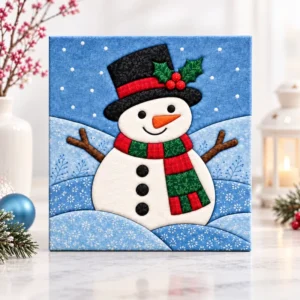
Fabric
Thin, tightly woven fabric is easiest to tuck. Quilting cotton is cheap and comes in endless prints. Silk and crepe give the traditional look. Old shirts and dresses are perfect too. Avoid stretchy knits and thick wool for small pieces. We compare them in detail in the best fabrics for kinusaiga.
Transferring the pattern: adhesive sheet or carbon paper
There are two common ways to get the design onto the foam. With a double-sided adhesive sheet, you stick the printed pattern onto the foam, score through paper and foam together, then peel off one paper piece at a time as you tuck. With carbon transfer paper, you trace the lines onto the foam and keep the printed pattern next to you as a color map. Both work. The adhesive method is faster and more precise for beginners.
Every printable kinusaiga pattern in our shop has numbered pieces and a color guide, so you always know which fabric goes where.
Frames and finishing
A finished panel looks best in a shadow box or a deep frame without glass, which shows the raised texture of the fabric. You can also wrap the outer edge with a fabric border and hang it as it is. Measure your foam after cutting and buy the frame to fit it, not the other way round.
What kinusaiga supplies cost
If you already have scissors and fabric scraps, a first project usually costs less than a kit. One sheet of insulation foam is enough for several pieces, and a pack of knife blades lasts many projects. The pattern is the only part you buy per project. That is why many makers choose patterns over kits once they have the tools.
Kinusaiga supplies: quick answers
Do you need glue for kinusaiga? No. The fabric is held by the groove. An adhesive sheet only holds the paper pattern in place while you work.
Do you need a needle or thread? No. Kinusaiga is a no-sew craft.
Can you use cardboard instead of foam? Not really. Cardboard does not close around the fabric, so pieces slip out. Use rigid foam.
Got your supplies? Read how to choose your first kinusaiga pattern, then browse our flower and animal kinusaiga patterns. If you are new to the craft, start with what kinusaiga is.