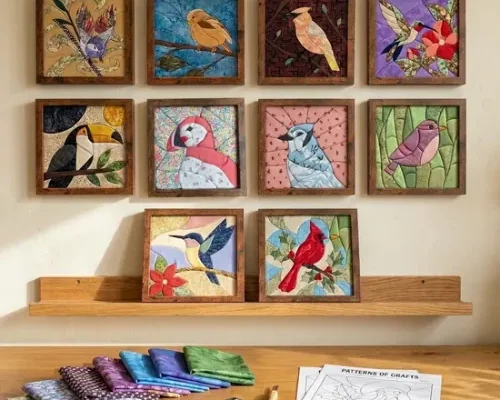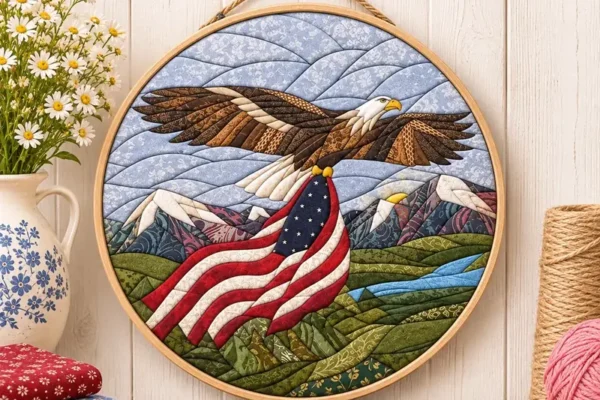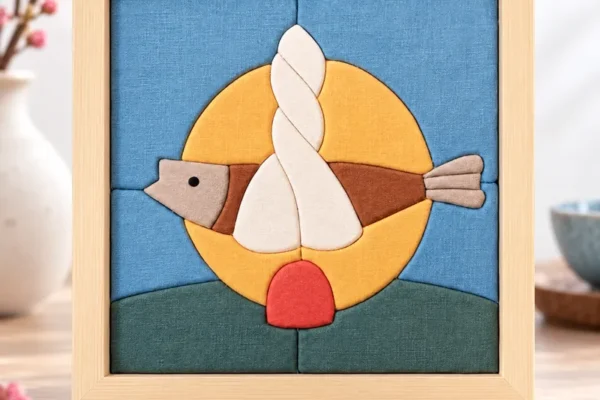
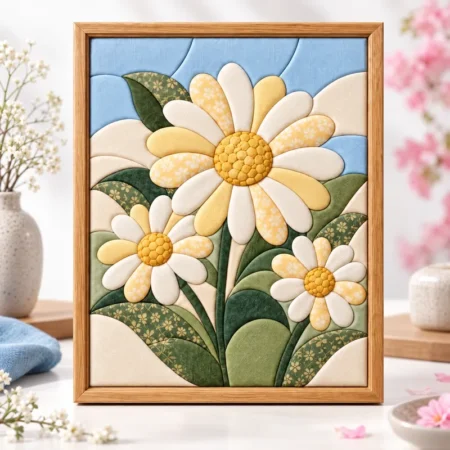
A kinusaiga kit puts everything for one picture in a box. A printable pattern gives you only the design, and you supply the foam and fabric. Both make the same kind of no-sew fabric art. The right choice depends on how many pieces you plan to make, how much you care about choosing your own fabrics, and how soon you want to start. These 5 questions will help you decide.
On this page
What is in a kinusaiga kit?
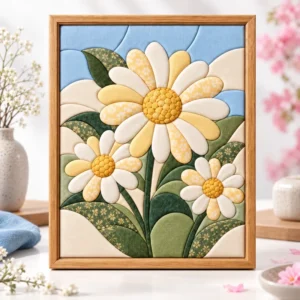
Most kinusaiga art kits contain a foam board, sometimes with the design already printed or pre-scored, a set of precut or coordinated fabric pieces, a simple tucking tool, often a small knife or seam ripper, and sometimes a frame. Kits are sold by small craft studios and on marketplaces, usually in square sizes such as 5×5, 6×6 or 8×8 inches.
What is in a printable kinusaiga pattern?
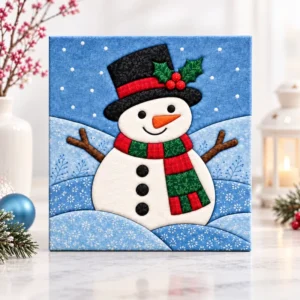
A printable pattern is a PDF you download and print at home. Ours include numbered full-scale templates, grain markers, a color guide and step-by-step instructions. You add your own foam, knife, tucking tool and fabric. Because the file is yours, you can print it again and make the design as many times as you like for personal use.
Kinusaiga kit vs pattern: side by side
| Question | Kinusaiga kit | Printable pattern |
|---|---|---|
| 1. What does one project cost? | Usually about $15–40 per kit | A pattern ($6–19 in our shop) plus supplies you reuse |
| 2. Can I choose my own fabrics? | Rarely: fabrics come matched | Yes: any scraps, colors or old clothes |
| 3. Can I make it again? | No: the board and fabric are used up | Yes: print the pattern again |
| 4. How soon can I start? | After shipping | Right after download |
| 5. Is it good for a first-ever piece? | Very: nothing to buy separately | Yes, once you have basic supplies |
When a kinusaiga kit is the better choice
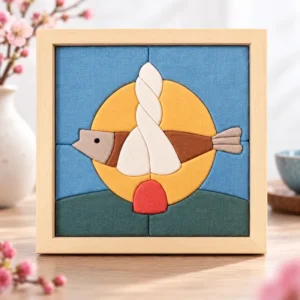
Be honest with yourself: a kit is the easiest way to try the craft once. If you are buying a gift for someone who has never done kinusaiga, or you want one relaxing evening project with zero shopping, a kit makes sense. It is also handy if you have no fabric stash at all.
When a pattern is the better choice
If you think you will make more than one piece, patterns quickly cost less, because the foam, knife and tools last for many projects. Patterns also give you far more designs to choose from, and they let you use fabric that means something to you, like a child’s outgrown dress or a parent’s shirt. That is part of the tradition: kinusaiga grew out of reusing old kimono silk.
Build your own kinusaiga kit for beginners
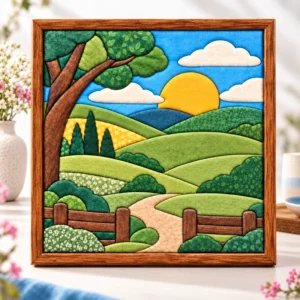
You can put together your own beginner kit in about 20 minutes at a craft or hardware store:
- One sheet of rigid XPS foam board, 10–25 mm thick. Cut it into squares for several projects.
- A craft knife and a pack of spare blades.
- A blunt tucking tool, or a bone folder or butter knife.
- Double-sided adhesive sheets or carbon transfer paper.
- Fat quarters of quilting cotton, or a bag of scraps.
- A printable kinusaiga pattern. Start with large, simple shapes.
Our full kinusaiga supplies list explains each item and which foam to avoid.
Good first patterns
For a first piece, choose a design with fewer, larger pieces. The sunflower kinusaiga pattern, the meadow bunny and the cherry blossom pattern are friendly starting points. If you want variety at a lower price, the Four Seasons bundle includes 4 designs.
Quick answers
Is a kinusaiga kit for adults or kids? Mostly adults and teens, because of the craft knife. Children can do the tucking if an adult does the cutting.
Are kimekomi kits the same thing? They are related. Kimekomi uses the same tucking technique on carved wooden dolls and balls, while kinusaiga uses it on flat panels to make pictures.
New to the craft? Start with what kinusaiga is and how it works.